What is an animal unit month (AUM)? A plain explanation for lease math
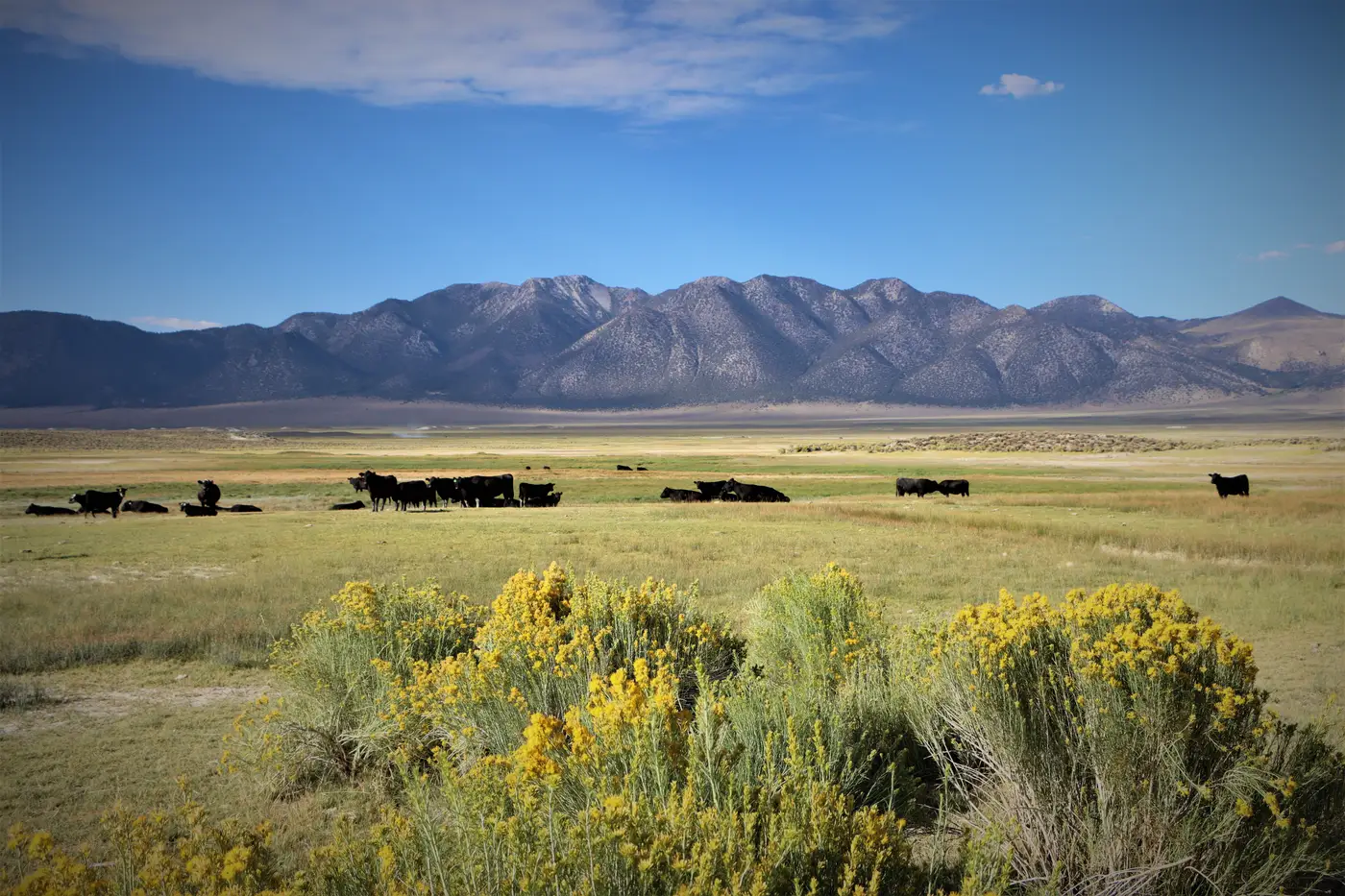
If you've ever stared at a BLM permit or a private lease agreement and seen "AUMs" listed next to a dollar figure, you already know the term matters even if nobody ever sat you down and explained it properly. Most of us picked it up the hard way, by asking the outgoing permittee or the lease broker what the number meant and nodding like we understood.
Here's the plain version.
AUM, defined
An Animal Unit Month is the amount of forage it takes to feed one animal unit for 30 days. The standard reference animal unit is a 1,000-pound cow, either dry or with a calf at side, eating roughly 26 pounds of air-dry forage a day. Multiply that out and you get somewhere around 780 pounds of dry matter per AUM. That number shows up in BLM and Forest Service permit math because it's the unit regulators settled on decades ago, and private leases copy the same convention because it's the only common currency everyone in the business already speaks.
So when a permit says "200 AUMs May through September," it's really just a forage budget. It's telling you how much grass that allotment is rated to carry across the season, converted into cow-months instead of tons of dry matter, because cow-months are what a rancher plans around.
Animal unit equivalents: not every head counts the same
The 1,000-pound cow is the baseline, but your herd probably isn't made up entirely of 1,000-pound cows. That's where the animal unit equivalent, or AUE, comes in. It's a conversion factor that scales other classes of livestock against that baseline:
- A mature bull often runs 1.3 to 1.5 AU because of the extra body weight and intake.
- Yearlings typically fall between 0.6 and 0.8 AU depending on weight.
- Horses are usually figured at 1.25 AU.
- Five sheep or goats are commonly treated as roughly one AU.
These factors aren't universal law. Some leases use NRCS tables, some use whatever the local extension office published thirty years ago, and some landlords just eyeball it. Before you sign anything, ask which conversion table the lease is built on, because a 0.2 difference in AUE per head adds up fast across a hundred-cow herd.
Running the grazing lease math
This is where AUMs stop being trivia and start being the number that decides whether you make money on a lease. Say you're offered a pasture rated at 150 AUMs for a four-month season, May through August.
First, convert your herd to animal units. A hundred mature cow-calf pairs at 1.0 AUE each is 100 AU. Run them for four months and you've used 400 AUMs, not 150. That pasture is rated for roughly 37 or 38 pairs for the full season, not a hundred.
Flip it the other way when you're pricing a lease. If the going rate is $20 per AUM and you want to run 60 pairs for five months, that's 60 AU times 5 months, or 300 AUMs, times $20. You're looking at $6,000 before you've turned a single cow out, and that's before accounting for water development, fence repair, or a drought year that cuts the carrying capacity mid-season.
That last part is the catch with AUM math done on paper alone: the number on the permit was set once, often years ago, based on range surveys that don't account for this year's rainfall. A pasture rated at 150 AUMs in a wet year carries fewer in a dry one, and nothing on the lease document updates itself to tell you that.
That's the gap a monthly head count against your pasture boundaries is built to close, since it tells you what's actually out there grazing against what the forage can currently support, rather than what a survey said it could support back when the lease was written.
If you'd rather know your stocking rate from the ground up each month than trust last decade's range survey, that's exactly what Livestock Counting does.