How to calculate carrying capacity for a cattle pasture
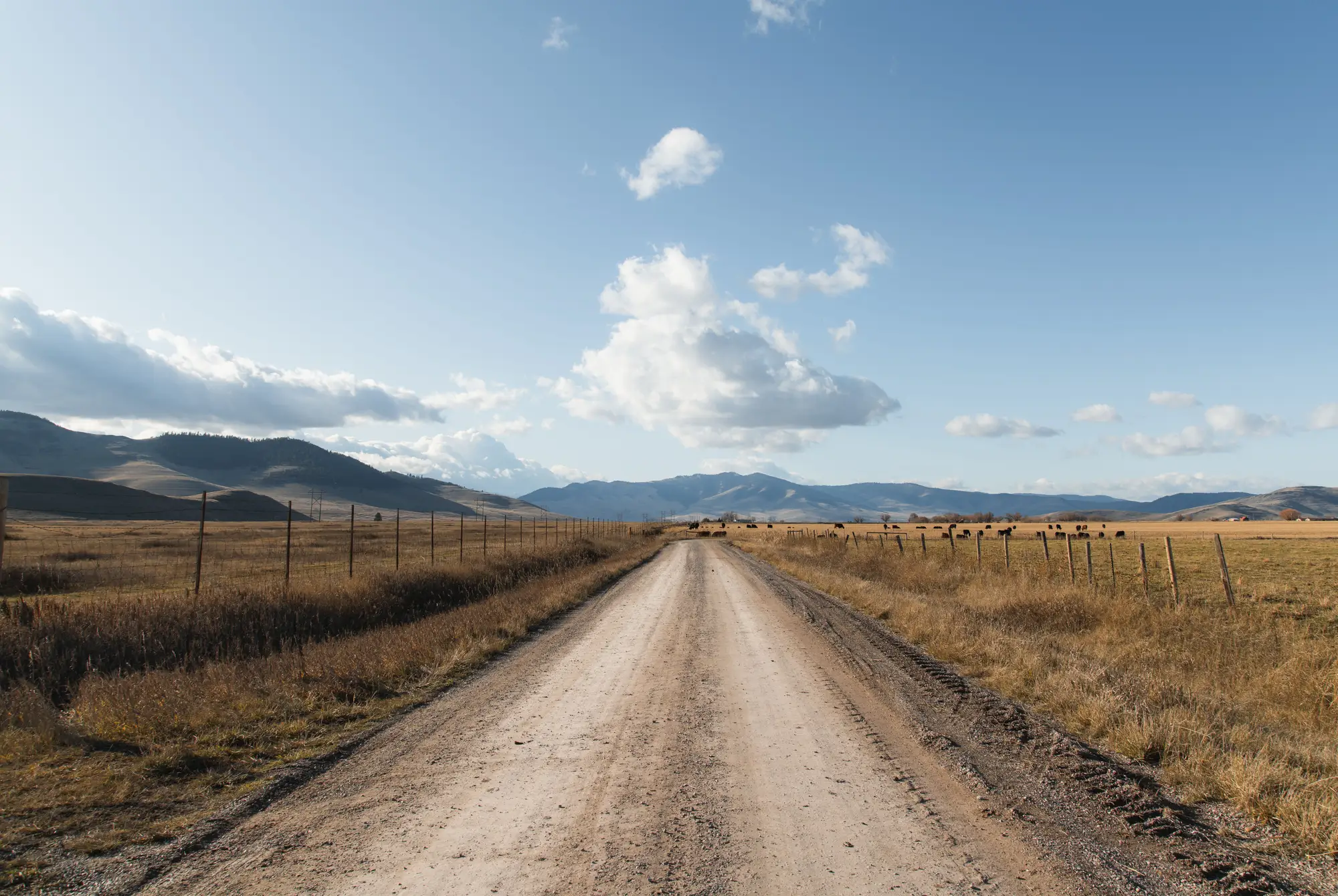
Carrying capacity for a cattle pasture comes down to one ratio: how much forage the ground will grow this season, divided by how much forage your cattle will eat. Everything else, AUMs, utilization rates, animal unit equivalents, is just unit conversion on top of that ratio.
The basic formula
The standard extension-office formula looks like this:
Carrying capacity (AUMs) = (forage production per acre × acres × utilization rate) ÷ forage demand per AU per month
Say a pasture runs 400 acres and clips out at 1,800 lb of air-dry forage per acre. At a 50% utilization rate (take half, leave half, the standard for season-long grazing), that's 900 lb of usable forage per acre, or 360,000 lb across the pasture. One animal unit eats roughly 790 lb of dry matter a month. Divide 360,000 by 790 and you get about 455 AUMs for that pasture for the season.
That number only means something once you know what's standing on it in animal units, and for how many months you're planning to leave them there.
Animal unit conversion
An animal unit (AU) is the baseline: a 1,000 lb cow, dry, with no calf at side, eating about 26 lb of dry matter a day. Nothing you actually run matches that exactly, so the conversion table does the adjusting:
- Cow-calf pair: 1.3 AU
- Mature bull: 1.3 to 1.5 AU
- Yearling (600-800 lb): 0.6 to 0.8 AU
- Weaned calf: 0.4 to 0.5 AU
Run 150 cow-calf pairs at 1.3 AU and you're carrying 195 AU, not 150. Add a dozen bulls at 1.4 AU and you're closer to 212. That 455-AUM pasture from the formula above supports roughly 455 ÷ 212 = 2.1 months of grazing for that herd, not the five or six months a head count alone might suggest.
This is the step where paper tallies and field tallies start to drift apart. A count taken at turnout doesn't account for calves growing into heavier AU brackets by August, bulls that got moved in mid-season, or the stray pairs that drifted in from the neighbor's fence line. The AUM math is only as good as the head count feeding it, and on 2,000-acre range that count usually comes from whatever the last ride-through turned up, weeks ago.
Forage availability per acre
Forage production per acre changes with rainfall, soil type, and how hard the pasture was grazed the year before. A clip-and-weigh sample, cutting forage from a measured quarter-acre square, drying it, and weighing it, is still the most direct way to get a real figure, though it only reflects one spot on one day. Range site guides give a faster estimate when there's no time to clip the whole place.
Residual stubble height is the cheaper proxy most outfits use day to day: if the grass is grazed down past four inches on a cool-season pasture, you're past the 50% mark regardless of what the spring estimate said. That's a lagging indicator though. By the time stubble height tells you a pasture is overgrazed, the damage to root reserves is already done for the year.
Where the math holds up and where it doesn't
The formula is sound. The two numbers that feed it, forage per acre and head count, are the ones that go stale fastest on open range, and they go stale in opposite directions: forage drops as the season dries out, while head count creeps up from calf growth and drift-ins that nobody walked the pasture to catch.
That's the gap Livestock Counting is built around: a monthly head count per pasture paired with a biomass read on the same ground, so the AUM side of the equation and the forage side of the equation get checked against each other instead of one running on a spring estimate and the other on a tally from turnout day.
If you're running the carrying capacity formula off a head count that's a season old, it might be worth checking what a current one would change.