How many cows per acre does rangeland actually support?
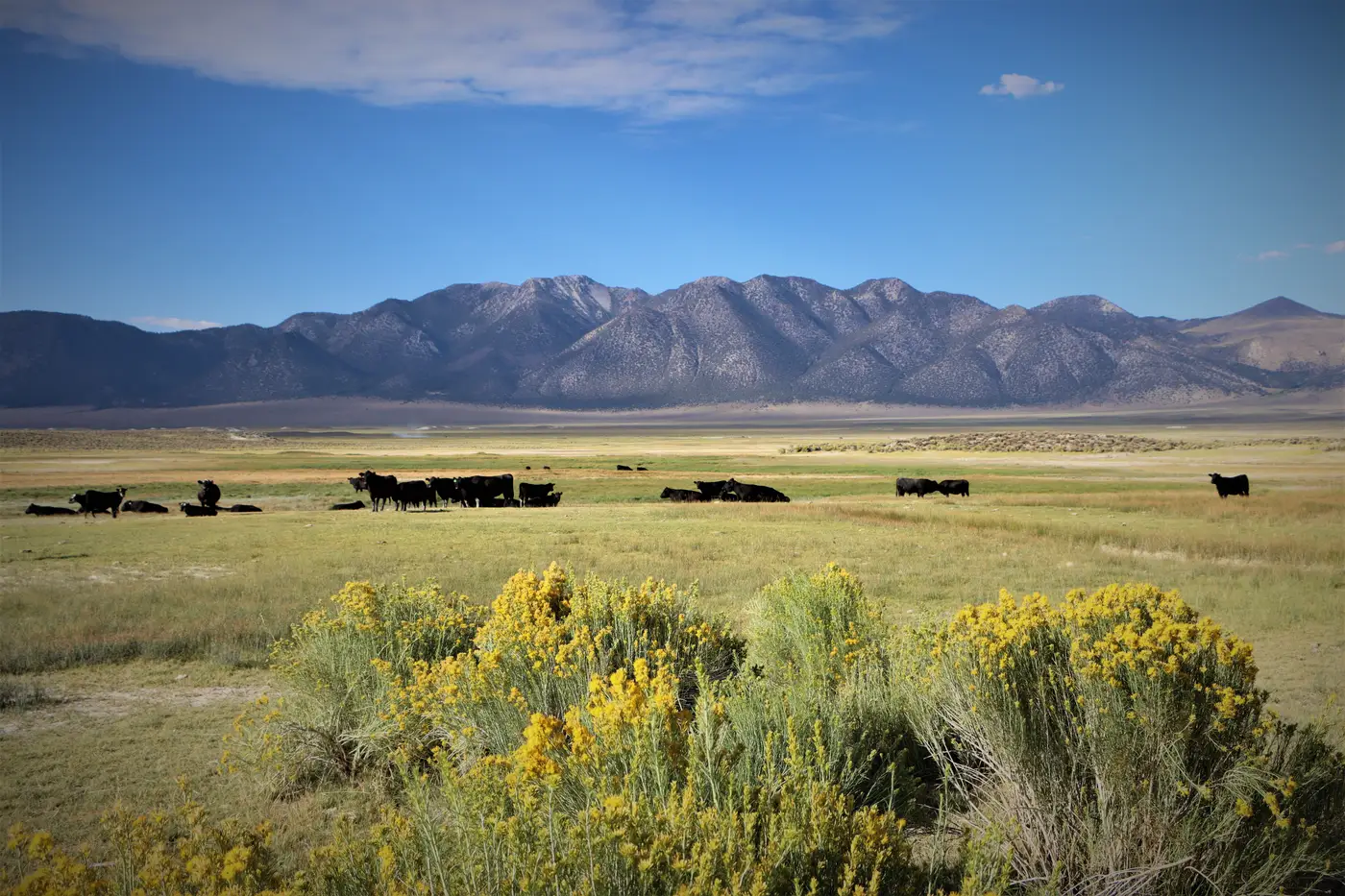
Ask three ranchers this question and you'll get three different numbers, and all three will be right for their own ground. There's no fixed cows-per-acre figure for rangeland because carrying capacity isn't a property of the land alone. It's a property of the land in a given year, under a given rainfall pattern, grazed at a given time of year.
Still, there's a usable number to start from. Here's how to find it for your own pasture.
Why "cows per acre" is the wrong unit to start with
Rangeland science doesn't run on cows per acre. It runs on animal units per section, or more precisely, animal unit months (AUMs) of forage production per acre. An animal unit is roughly a 1,000-pound cow with a calf, eating about 26 pounds of dry forage a day. A section is 640 acres.
The reason this matters: a cow on shortgrass prairie in eastern Montana and a cow on tallgrass in the Flint Hills are eating wildly different amounts of standing forage per acre, because the land is producing wildly different amounts of forage per acre. Arid rangeland in the Southwest might run one animal unit on 25 to 40 acres for a full year. Better-watered tallgrass country might carry one animal unit on 2 to 5 acres. Both are "rangeland." Neither number transfers to the other's ground.
So when someone asks how many cows per acre rangeland supports, the honest answer is: pull your NRCS ecological site description, find the published forage production range for your site and condition class, and convert that to AUMs per acre for your pasture. That gives you a starting stocking rate, not a final one.
What moves the number year to year
Published carrying capacity figures assume average precipitation and good range condition. Most years aren't average. A drought year can cut standing forage by a third or more against a wet year on the same acres, which means the stocking rate that worked fine last season can overgraze this one even with the same head count.
This is the part that bites ranch managers who set a stocking rate once and leave it. The forage base moves. The herd doesn't, unless someone's out there checking.
A few things that shift carrying capacity on the ground, separate from the textbook number:
- Precipitation timing, not just total rainfall. Two inches in May does more for cool-season grass than two inches in August.
- Grazing history. A pasture rested the prior season carries more than one grazed hard two years running.
- Brush encroachment. Mesquite or juniper creeping in quietly eats into grass production even when the acreage on the deed stays the same.
- Distance to water. Utilization isn't even across a pasture. Cattle hammer the acres near the tank and barely touch the far corner, so the "per acre" average hides real overgrazing in parts of the pasture.
That last point is why stocking density (how many animal units are concentrated in a given area at a given time) matters as much as stocking rate (the seasonal average over the whole pasture). You can be correctly stocked on paper and still be trailing a pasture into the ground near the water gap.
Setting a working number, then checking it
For a practical starting point, most published tables build off the same math: take your pasture's AUM-per-acre rating from the ecological site description, multiply by acres, divide by animal unit equivalents in your herd, and you get the months that pasture should carry them. Then you watch the grass, not the calendar, because the published number is an estimate from an average year, and this year is rarely average.
The watching part is where most outfits fall behind. Riding or driving every paddock monthly to eyeball both the head count and the grass is a lot of pickup miles across country too big to cover on foot, and it's easy to miss a pasture quietly sliding toward overstocked between checks. Livestock Counting was built around exactly that gap: a monthly per-pasture head count paired with a biomass read, so an over- or under-stocked paddock shows up as a flag before the grass tells you the hard way.
If you're tired of finding out a pasture's been overstocked after the grass is already gone, that's the problem this is built to catch earlier.